
Borehole Drilling and Repairs
We expand access to safe water through new boreholes and the rehabilitation of broken water points ensuring reliable supply for households, schools, and health facilities.
We expand access to safe water through new boreholes and the rehabilitation of broken water points ensuring reliable supply for households, schools, and health facilities.
Gender-Sensitive Sanitation Facilities
We construct safe, inclusive latrines and handwashing stations in schools and public spaces designed to protect privacy, safety, and dignity, especially for women and girls.
We construct safe, inclusive latrines and handwashing stations in schools and public spaces designed to protect privacy, safety, and dignity, especially for women and girls.
Menstrual Hygiene Management (MHM)
We promote menstrual dignity by distributing reusable sanitary pads, providing menstrual health education, and tackling stigma so girls can stay in school and thrive.
We promote menstrual dignity by distributing reusable sanitary pads, providing menstrual health education, and tackling stigma so girls can stay in school and thrive.
Hygiene Promotion
Through community dialogues and school workshops, we promote handwashing, water safety, and environmental hygiene preventing disease and strengthening public health.
Through community dialogues and school workshops, we promote handwashing, water safety, and environmental hygiene preventing disease and strengthening public health.
Emergency WASH in Crisis Settings
In emergencies, we respond rapidly with hygiene kits, water treatment supplies, and temporary sanitation facilities to protect displaced families from disease outbreaks.
In emergencies, we respond rapidly with hygiene kits, water treatment supplies, and temporary sanitation facilities to protect displaced families from disease outbreaks.

Community Engagement and Sustainability
We train and support local WASH committees to manage and maintain infrastructure building ownership, accountability, and long-term impact.
We train and support local WASH committees to manage and maintain infrastructure building ownership, accountability, and long-term impact.
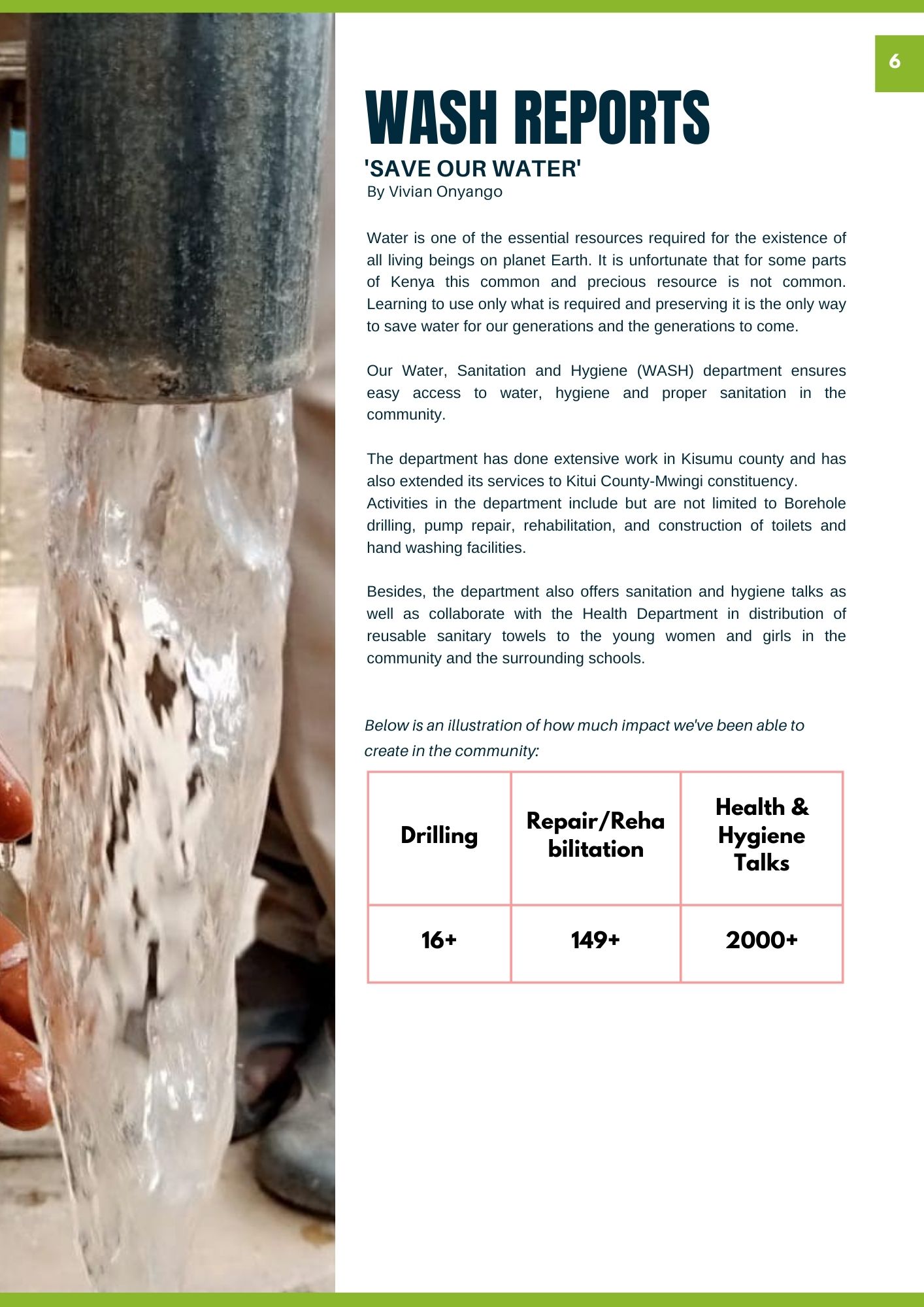

Our Reach So Far
- 151 boreholes drilled
- 1,139 water pumps repaired
- 224 water points rehabilitated
- 12 gender-sensitive latrines constructed
- 1,538 hygiene workshops conducted
- 21,318 packets of reusable sanitary towels distributed